The Work-from-Sun Shift: Why Spain is Europe’s New Remote Work Capital
Imagine starting your Tuesday morning not with the grey drizzle of a Northern European sky, but with the scent of toasted pan con tomate and the gentle amber glow of the Mediterranean sun hitting your laptop screen. As we move through 2025 and look toward 2026, this isn’t just a holiday fantasy—it is the daily reality for hundreds of thousands of professionals.
The “Work-from-Sun” shift has officially transformed Spain from a mere vacation destination into Europe’s undisputed remote work powerhouse. But what is driving this mass migration of talent, and how is the Spanish lifestyle reshaping the way we think about productivity?
The 2025 Context: More Than Just a Visa
While the initial buzz around “digital nomadism” started years ago, 2025 marks a turning point of maturity. Spain’s Digital Nomad Visa, introduced in 2023, has now been refined. The bureaucracy that once deterred many has been streamlined, offering a clear path for non-EU and EU citizens alike to establish residency.
For the European professional, the “Beckham Law” tax regime—recently updated to be even more inclusive of remote workers—allows many newcomers to pay a flat tax rate of 24% on Spanish-sourced income. When you pair this with a cost of living that, despite inflation, remains significantly lower than in London, Paris, or Amsterdam, the “math of happiness” becomes hard to ignore. In mid-sized Spanish cities, a high-quality lifestyle including a three-course menú del día for €12–€15 and a monthly transport pass for under €30 is still very much the standard.
Beyond Madrid and Barcelona: The Rise of the “Smart City”
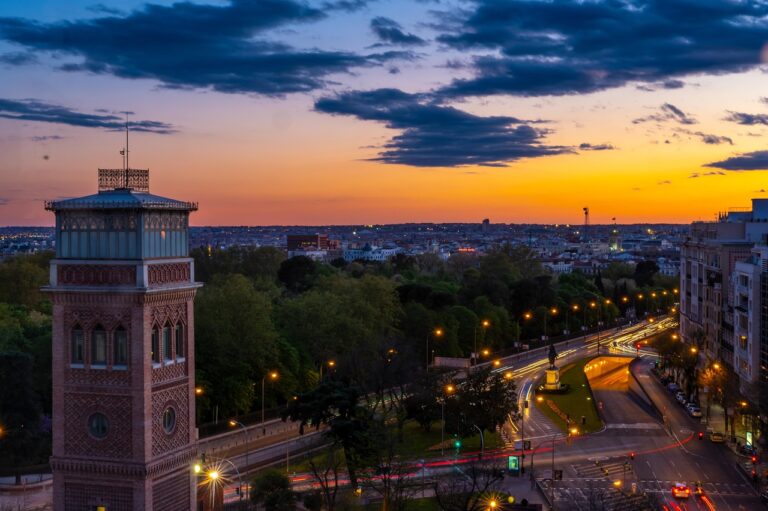
For years, the choice was simple: the cosmopolitan bustle of Madrid or the beachy charm of Barcelona. However, in 2025, the map of remote work in Spain has expanded beautifully.
Málaga has earned its nickname as the “Silicon Alley” of Europe. It’s no longer just a gateway to the Costa del Sol; it’s a tech hub hosting giants like Google and Vodafone. The city offers a perfect blend of high-speed 5G connectivity and a world-class art scene, headlined by the Picasso Museum and the Centre Pompidou.
Valencia, crowned the European Green Capital, has become the go-to for those prioritizing sustainability. With its sprawling Turia Park and bike-friendly infrastructure, it caters to the “slow working” movement. Meanwhile, the Canary Islands have solidified their status as the winter headquarters for the continent, where the “eternal spring” allows for surfing at 8:00 AM and a Zoom call at 10:00 AM.
Even the España Vaciada (Empty Spain) is seeing a revival. Remote workers are moving into renovated stone houses in the mountains of Asturias or the plains of Castilla-León, drawn by “Smart Village” initiatives that provide fiber-optic internet to the most remote corners of the peninsula.
The Art of “Sobremesa” and Mental Health
Perhaps the biggest draw for the modern European worker isn’t the internet speed, but the societal values. In a post-burnout world, Spain’s culture offers a radical alternative to “hustle culture.”
The concept of sobremesa—the art of lingering at the table long after the meal has finished to talk, laugh, and connect—is perhaps the greatest gift Spain offers the remote worker. It teaches an essential lesson: your work is what you do, not who you are. This cultural emphasis on social connection acts as a natural buffer against the isolation often felt by remote employees.
Furthermore, the Spanish “rhythm” is inherently flexible. While the traditional siesta is largely a myth in the corporate world, the practice of a late dinner and an emphasis on evening socializing (el terraceo) encourages workers to step away from their screens. In Spain, the “right to disconnect” isn’t just a legal suggestion; it’s a social norm.
A Cultural Renaissance in the Coworking Era
Spain’s art and society are also evolving alongside this demographic shift. Coworking spaces are no longer just sterile offices with desks; they are cultural hubs. In cities like Seville and Bilbao, you’ll find “Coliving” spaces housed in refurbished palaces or industrial warehouses, where weekend excursions to local vineyards or contemporary art galleries are part of the membership.
The influx of international talent is creating a new, “New-Spanish” identity—one that is multilingual and tech-forward but deeply rooted in local traditions. You’ll see remote workers participating in the Castellers (human towers) in Catalonia or learning the art of flamenco in Granada, proving that the Work-from-Sun shift is as much about cultural immersion as it is about career flexibility.
Navigating the Challenges
Of course, the shift hasn’t been without its growing pains. As we head into 2026, the conversation in Spain has turned toward “sustainable nomadism.” Local governments and residents are pushing for a balance that prevents gentrification from pushing locals out of historic centers.
The most successful remote workers in 2025 are those who “integrate, not just inhabit.” This means learning the language (even just the basics), shopping at local mercados instead of international chains, and paying into the local economy. The Spanish government is increasingly favoring “mid-term” stays and residents over “short-term” tourists to ensure social cohesion.
The Verdict: Why Spain Wins
Why is Spain the capital of the remote work revolution? Because it offers the one thing Northern Europe often lacks: a high “Joy-to-Euro” ratio.
As the 2025/26 season approaches, the trend is clear. With world-class high-speed rail (the AVE and Iryo networks) making it possible to breakfast in Seville and lunch in Madrid, a stable legal framework for nomads, and a society that values the sunset as much as the spreadsheet, Spain isn’t just a place to work. It’s a place to remember how to live.
If you’ve been waiting for a sign to pack your laptop and head south, this is it. The sun is out, the coffee is hot, and the office has never looked better.